


Bohag Bihu 2026 is almost here — and Assam is ready to celebrate. Discover the festival’s date, seven-day rituals, cultural significance, and why this Rongali Bihu season is the perfect time to plant new roots in Guwahati.
Spring in Assam does not arrive quietly. It arrives with the thunderous beat of the dhol, the lilting cry of the pepa, and the swirl of mekhela chadors dancing under open skies. Rongali Bihu, also called Bohag Bihu, fills the land with laughter, dance, and the beating sound of traditional drums — making Assam shine like a land full of joy, music, and tradition.
For Assamese people everywhere, Bohag Bihu is not just a festival. It is an emotion, a homecoming, and a declaration that life begins anew. And in 2026, that declaration comes right on schedule.
When Is Bohag Bihu 2026?
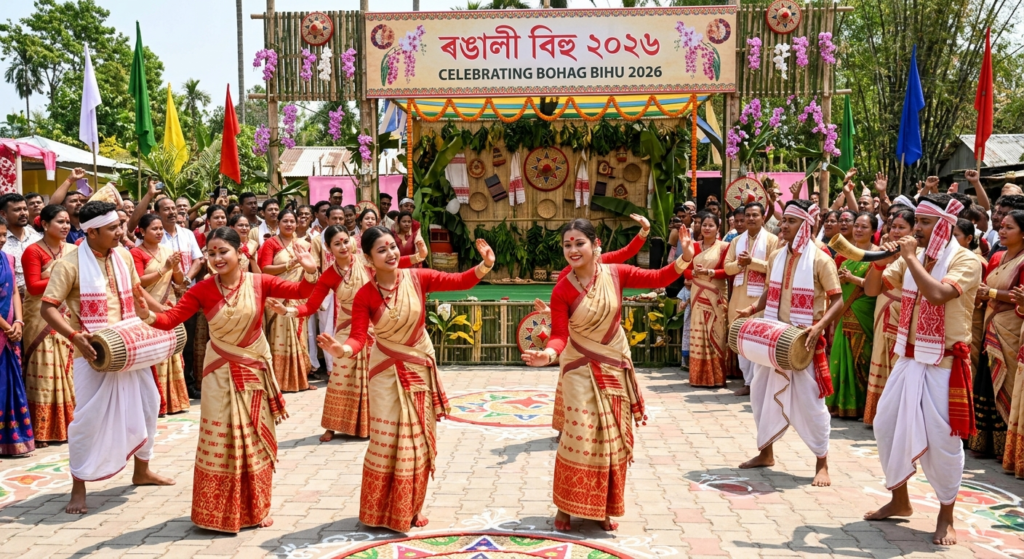
Bohag Bihu 2026 will be celebrated from Tuesday, 14th April to Monday, 20th April 2026. The public holiday will fall on Wednesday, 15th April 2026. PublicHolidays.in
Also known as Rongaali Bihu — “Rong” meaning joy in Assamese — this is the national festival of Assam, one of the most beautiful states of India, famed for its tea gardens, green forests, and the Brahmaputra river.
Mark your calendars, stock up on pitha ingredients, and get that new gamosa ready. Bohag Bihu 2026 is going to be a celebration to remember.
What Is Bohag Bihu? The Heart of Assamese Culture
Assam celebrates Bihu three times a year, but not all Bihus are equal. Rongali Bihu marks the Assamese New Year and the beginning of the sowing season, Kongali Bihu is observed in October during a lean agricultural period symbolizing hope and prayer, and Bhogali Bihu in January marks the end of the harvest season with feasting and gratitude.
Of the three, Bohag Bihu reigns supreme. It is the celebration of spring, fertility, and fresh starts — a time when the entire state feels electric with possibility.
The meaning of Bihu has its origins in the Sanskrit term “Bishu,” which suggests asking for blessings and prosperity from the Gods during the harvest season of Assam. Rudraksha Ratna This ancient spiritual core is what gives the festival its extraordinary staying power across generations.
The Seven Days of Bohag Bihu 2026: A Day-by-Day Guide
One of the most distinctive features of Bohag Bihu is that it is not a single-day affair — it unfolds across seven meaningful phases. Here is what each day means:
Day 1 — Goru Bihu (Cattle Day) On this day, household cattle are taken to the river and bathed, and people pray for the wellbeing and safety of their livestock. Office Holidays It is a day rooted in agrarian gratitude, acknowledging the animals that sustain Assamese farming life.
Day 2 — Manuh Bihu (People’s Day) People wake up early and bathe with raw turmeric and urad dal paste, wear new clothes, and seek blessings from elders, followed by jalpan — a light breakfast of sticky rice along with curd and jaggery. The gifting of the gamosa — the hand-woven Assamese cloth — is central to this day.
Day 3 — Kutum Bihu (Kinship Day) “Kutum” symbolises “Kin.” On this day people visit their families, relatives, and friends and have lunch or dinner together and share news and stories. Wikipedia It is essentially Assam’s version of a grand family reunion.
Day 4 — Mela Bihu (Community Fair Day) The third day of Bohag month is marked by outdoor cultural events, competitions, and community fairs. This is where the iconic Bihu dance takes center stage.
Day 5 — Sera Bihu / Bohagi Bidai Also called Phato Bihu, it is the final major day of Rongali Bihu. In different regions of Assam, people celebrate it differently, but the common theme is wrapping up celebrations with contemplation and future resolutions.
The remaining days are marked by continued community gatherings, cultural programs, and the quiet joy of being together.
The Cultural Soul of Bohag Bihu: Dance, Music, and More
No description of Bohag Bihu is complete without talking about the Bihu dance — perhaps the most electrifying folk performance in all of Northeast India.
The folk dance of Bohag Bihu is an indigenous folk dance known as the “Bihu dance.” It is performed in a group consisting of young men and women, and their dancing style is characterised by brisk steps and rapid movement of the hands.
The rhythmic beats of the dhol, pepa (buffalo horn), and gogona fill the air, creating an atmosphere of excitement and unity. In 2026, Bihu dance competitions and cultural programs are expected to be held across Assam and in Assamese communities worldwide.
The Bihu dance is recognized by UNESCO’s Intangible Cultural Heritage list, a testament to how deeply this art form is woven into the world’s cultural fabric. For residents and visitors in Guwahati, the Bihutoli events across the city are unmissable.
Bohag Bihu Beyond Assam: A Global Celebration
Over the years, Bohag Bihu has spread far beyond the borders of Assam. With the help of social media and digital platforms, people across the world now celebrate and share the spirit of Bihu. Assamese communities living in different parts of India and abroad organise their own Bihu events to keep their traditions alive.
This global spread speaks to something profound: Bohag Bihu is not just a regional festival. It is a universal human story about renewal, community, and the courage to begin again.
Bohag Bihu and the Idea of a New Beginning
There is a reason Bohag Bihu resonates so deeply. Every major life milestone — a new job, a wedding, the start of a business, moving into a new home — carries the same emotional charge as this festival. It is the feeling of turning a fresh page.
At Ambika Group, Guwahati’s trusted real estate developer since 2002, we understand this feeling intimately. Just as Bohag Bihu marks the start of the Assamese New Year and the promise of abundance, moving into a new home marks the beginning of a new chapter for your family.
This festive season, many families in Guwahati are choosing to make their biggest new beginning — investing in a home that grows with them. Whether you are looking for a serene residential plot or a strategically located commercial space, the Bohag Bihu season has always been considered auspicious for such major life decisions.
Celebrating Bohag Bihu 2026 in Guwahati: What to Expect
Guwahati, as the gateway city of Assam, comes alive during Bohag Bihu like nowhere else. Here is what you can expect across the city:
Bihutoli Events: Major open-air festival grounds host dance and music performances from early morning to late at night. Look out for events at Sarusajai Stadium, Judges Field, and neighbourhood associations throughout the city.
Traditional Food Markets: Streets fill with vendors selling pitha (rice cakes), laru (coconut or sesame balls), chira, doi, and amlori. This is comfort food at its most festive.
Cultural Programmes on TV and Online: Bihu dance videos get a lot of views online, Bihu songs become popular on music apps, and live events are shown on YouTube and other platforms — so even if you cannot attend in person, the celebration comes to you.
New Clothes and Gifting: Families across Guwahati shop for new traditional attire — mekhela chador for women, dhoti and kurta for men — and exchange gamosas as tokens of love and respect.
Why Bohag Bihu 2026 Is the Right Time to Invest in Guwahati
Guwahati is no longer just Assam’s largest city — it is one of Northeast India’s fastest-growing urban centres. New infrastructure, expanding connectivity, and rising demand for quality housing make this city a compelling destination for real estate investment.
According to India’s Ministry of Housing and Urban Affairs, Guwahati is one of the key AMRUT cities earmarked for sustained urban development, underlining its long-term growth potential.
The festive season of Bohag Bihu has traditionally been a time when Assamese families make significant decisions — and buying a home tops that list. If you have been considering a residential plot, apartment, or commercial space in Guwahati, there is no more auspicious time than now.
Ambika Group’s portfolio of developments across Guwahati is designed for exactly this kind of forward-thinking buyer — people who value quality, location, and a developer they can trust. Explore our projects at ambikahousing.com and take your first step into a new chapter this Bohag Bihu.
Conclusion: Let Bohag Bihu 2026 Be Your New Beginning
Rongali Bihu 2026 will once again fill Assam with joy, music, and laughter. It reminds everyone that happiness grows when people share love and celebrate together.
Whether you are dancing at a Bihutoli in Guwahati, calling your loved ones across the globe, or quietly sitting down to a plate of pitha with your family — Bohag Bihu 2026 is your invitation to begin again.
And if beginning again means finding a home that matches your aspirations, Ambika Group is here to walk that journey with you. Since 2002, we have helped families across Guwahati find not just properties, but places to belong. This Bohag Bihu, let your new chapter start with us.
Frequently Asked Questions
Q1. When is Bohag Bihu 2026?
Bohag Bihu 2026 begins on Tuesday, 14th April and the celebrations continue through Monday, 20th April 2026. The public holiday falls on Wednesday, 15th April 2026.
Q2. What is another name for Bohag Bihu?
Bohag Bihu is also called Rongali Bihu. “Rongali” comes from the Assamese word “Rong,” meaning joy, reflecting the festive spirit of the occasion.
Q3. How many days is Bohag Bihu celebrated?
Bohag Bihu is celebrated over seven days, with each day carrying its own name and ritual — from Goru Bihu (cattle worship) on day one to the Sera Bihu farewell celebrations.
Q4. Is Bohag Bihu a public holiday in 2026?
Yes. The Assam state government declares it a Gazetted Holiday. At the central government level, it is listed as a Restricted Holiday (RH) for 15th April 2026.
Q5. What is the traditional food of Bohag Bihu?
Popular Bohag Bihu foods include pitha (rice cakes), laru (coconut or sesame balls), chira (flattened rice), doi (curd), and jaggery. These are prepared at home and shared with family and neighbours.
Q6. What is the significance of the gamosa during Bohag Bihu?
The gamosa is a hand-woven white cloth with red borders that holds deep cultural meaning in Assam. During Bihu, it is gifted to elders as a mark of respect, and to friends as a gesture of warmth and affection.
Q7. Is Bohag Bihu a good time to buy property in Guwahati?
Many Assamese families consider the Bihu season auspicious for significant life decisions, including buying homes or land. With Guwahati’s real estate market growing steadily, the Bohag Bihu 2026 season is an excellent window to explore your options with trusted developers like Ambika Group.