
Indian Real Estate Industry 2026 explores market size, growth drivers, real estate types, investment trends, and the future outlook of India’s rapidly evolving property sector.
The Indian real estate industry 2026 stands at a defining juncture. After navigating regulatory reforms, economic cycles, and changing consumer preferences over the past decade, India’s real estate sector has emerged stronger, more transparent, and increasingly investor-friendly. As India continues its journey toward becoming a USD 5-trillion economy, real estate remains a critical growth engine—driving employment, infrastructure development, and wealth creation.
In 2026, the sector reflects renewed confidence, supported by strong housing demand, institutional investments, infrastructure expansion, and evolving asset classes.
This blog offers a comprehensive overview of the real estate market size in India, explains what are the 4 types of real estate, examines the ongoing real estate boom in India, and evaluates the future of real estate in India.
Overview of the Indian Real Estate Industry 2026
The Indian real estate industry is the second-largest employment generator after agriculture and contributes significantly to the country’s GDP. By 2026, the sector has transitioned from a fragmented and largely unorganized market into a more structured, regulated, and professionally managed ecosystem.
Key reforms such as the Real Estate (Regulation and Development) Act (RERA), the implementation of GST, digitization of land records, and increased compliance standards have fundamentally altered the industry’s operating environment. These reforms have improved accountability, strengthened buyer confidence, and attracted large-scale domestic and foreign investments.
The Indian real estate industry 2026 is no longer driven purely by speculation. Instead, it is increasingly demand-led, end-user focused, and aligned with long-term urban and economic planning.
Real Estate Market Size in India: Current Scenario
The real estate market size in India has witnessed steady expansion over the last few years. By 2026, the sector is valued in hundreds of billions of dollars, making it one of the fastest-growing real estate markets globally.
Several factors contribute to this expanding market size:
- Rising urban population and nuclear family structures
- Growing middle-class incomes and homeownership aspirations
- Large-scale infrastructure investments
- Increased institutional participation through private equity, REITs, and sovereign funds
Industry projections indicate that India’s real estate market is on track to contribute a significantly larger share to the national GDP over the next decade. Residential real estate continues to dominate in terms of volume, while commercial and industrial segments drive value growth.
What Are the 4 Types of Real Estate?
To fully understand the Indian property market, it is essential to answer a fundamental question: what are the 4 types of real estate? These four categories define the structure and investment opportunities within the sector.
1. Residential Real Estate
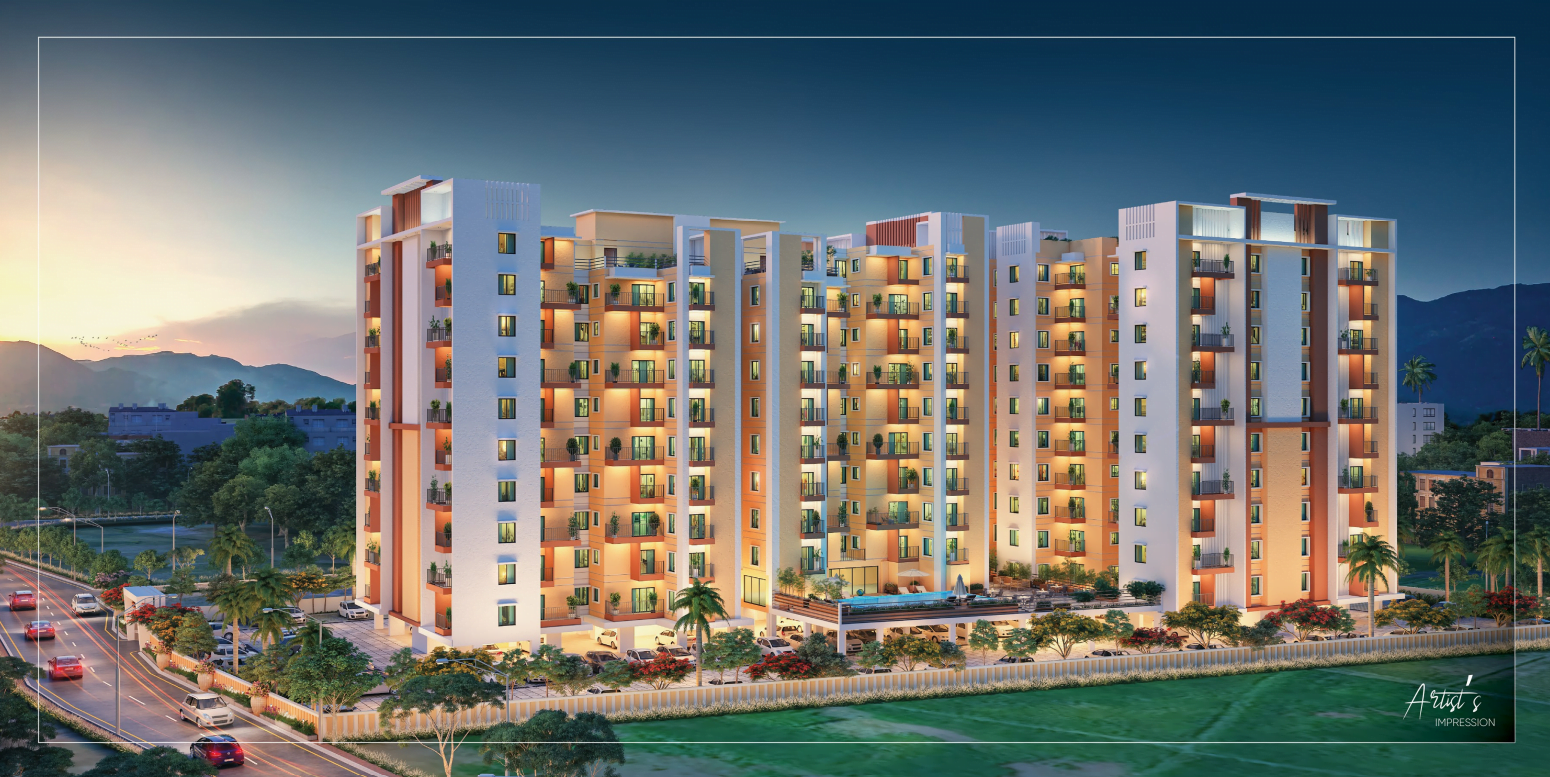
Residential real estate includes apartments, independent houses, villas, townships, and affordable housing projects. It remains the backbone of the Indian real estate industry.
In 2026, residential demand is driven by:
- End-users seeking homeownership rather than speculative investors
- Demand for larger homes due to work-from-home and hybrid work models
- Increased preference for gated communities with amenities
- Growth in Tier-II and Tier-III cities due to better connectivity and affordability
2. Commercial Real Estate
Commercial real estate comprises office buildings, IT parks, business centres, co-working spaces, and retail properties.
Despite global uncertainty, India’s commercial real estate sector continues to perform strongly due to:
- Expansion of global capability centres (GCCs)
- Growth of the IT, BFSI, and consulting sectors
- Flexible workspace adoption
- Strong leasing activity in major cities such as Bengaluru, Hyderabad, Pune, and Gurugram
3. Industrial Real Estate
Industrial real estate includes warehouses, logistics parks, manufacturing facilities, and distribution centres.
This segment has gained immense momentum due to:
- Rapid growth of e-commerce and quick-commerce platforms
- Supply chain modernization
- Government initiatives such as “Make in India” and “Gati Shakti”
- Increased demand for Grade-A warehousing
4. Land
Land includes agricultural land, undeveloped plots, and land held for future development. While land investment requires careful due diligence, it remains a long-term wealth creation asset, especially near upcoming infrastructure corridors.
Understanding what are the 4 types of real estate helps investors and buyers make informed decisions based on risk appetite, return expectations, and time horizon.
Residential Real Estate: The Pillar of Growth
Residential housing continues to be the strongest contributor to the real estate boom in India. By 2026, residential real estate accounts for the majority share of the overall market activity.
Key trends shaping residential real estate include:
- Strong demand for mid-income and premium housing
- Declining inventory overhang in major cities
- Focus on timely project delivery due to RERA
- Increasing home loan availability and financial literacy
Affordable housing, supported by government incentives and policy support, continues to attract both developers and first-time buyers. Meanwhile, luxury housing is witnessing renewed interest from high-net-worth individuals seeking lifestyle upgrades and asset diversification.
Commercial Real Estate and the Rise of Institutional Capital
Commercial real estate plays a strategic role in the Indian real estate industry 2026, especially in attracting institutional investments.
The introduction of Real Estate Investment Trusts (REITs) has transformed the commercial property landscape by:
- Offering retail investors access to income-generating assets
- Improving liquidity and transparency
- Encouraging developers to create high-quality commercial assets
Office leasing remains resilient, while retail real estate is witnessing a revival driven by experiential shopping formats, organized retail expansion, and consumption growth in urban and semi-urban areas.
Industrial and Logistics: The Fastest-Growing Segment
One of the most significant developments in recent years has been the rapid expansion of industrial and logistics real estate. This segment is a key contributor to the ongoing real estate boom in India.
Drivers of growth include:
- E-commerce penetration across smaller cities
- Increased demand for cold storage and specialized warehouses
- Infrastructure upgrades such as dedicated freight corridors
- Entry of global logistics players into India
As India strengthens its manufacturing and export capabilities, industrial real estate is expected to remain a high-growth segment well beyond 2026.
Real Estate Boom in India: Key Growth Drivers
The real estate boom in India is not a short-term phenomenon but the result of structural and demographic factors.
Economic Growth
India’s steady economic expansion fuels employment, income growth, and housing demand.
Infrastructure Development
Metro rail projects, highways, airports, and smart city initiatives expand real estate potential across new corridors.
Regulatory Reforms
RERA and digitization initiatives have enhanced transparency, reduced risk, and improved buyer confidence.
Changing Consumer Preferences
Modern buyers prioritize quality construction, amenities, sustainability, and long-term value rather than speculative gains.
Together, these factors are creating a sustainable growth cycle for the sector.
Challenges Facing the Sector
Despite strong fundamentals, the Indian real estate industry faces challenges:
- Affordability pressures in prime urban markets
- Rising construction costs
- Land acquisition complexities
- Regulatory compliance requirements
However, these challenges are also pushing the industry toward greater professionalism, innovation, and efficiency.
Future of Real Estate in India: Long-Term Outlook
The future of real estate in India looks robust, resilient, and innovation-driven. Over the next decade, the sector is expected to evolve in several key ways:
Urban Expansion and New Cities
India’s urban population will continue to grow, creating sustained housing and infrastructure demand.
Technology Integration
PropTech, AI-driven analytics, virtual site visits, and digital transactions will redefine property buying and management.
Sustainable Development
Green buildings, energy-efficient designs, and ESG-compliant projects will become mainstream.
Alternative Asset Classes
Data centres, co-living spaces, student housing, and senior living projects will emerge as important growth areas.
The future of real estate in India will be shaped by long-term demand fundamentals rather than short-term speculation, making it an attractive destination for global and domestic investors alike.
Indian Real Estate Industry 2026: Building the Foundation for Long-Term Growth
The Indian real estate industry 2026 reflects a sector that has matured significantly in structure, transparency, and resilience. No longer driven by short-term speculation, the industry today is anchored in end-user demand, institutional capital, and long-term urban development goals. With sustained economic growth, rising urbanization, and progressive regulatory reforms, real estate continues to play a pivotal role in India’s development story.
The expanding real estate market size in India highlights the sector’s growing contribution to GDP, employment, and infrastructure creation. Residential real estate remains the dominant force, while commercial, industrial, and land segments add depth and diversity to the market. A clear understanding of what are the 4 types of real estate enables investors, developers, and homebuyers to identify opportunities aligned with their financial objectives and risk appetite.
The ongoing real estate boom in India is being driven by structural fundamentals—strong housing demand, infrastructure-led growth, technology adoption, and increased institutional participation. At the same time, challenges such as affordability pressures and rising input costs are encouraging the industry to innovate, improve efficiency, and focus on sustainable development.
Looking ahead, the future of real estate in India appears robust and future-ready. Emerging asset classes, green construction practices, digital transformation, and expanding urban corridors are expected to redefine the sector in the coming decade. As India advances toward becoming a global economic powerhouse, real estate will remain a critical pillar supporting inclusive growth, wealth creation, and long-term investment value.