
India’s housing landscape is undergoing a significant transformation. Rapid urban expansion, increasing population density, rising construction costs, and the demand for sustainable living solutions are pushing both consumers and developers to explore alternatives to conventional housing. Traditional construction methods, while familiar, often struggle to meet modern demands for speed, efficiency, and flexibility.
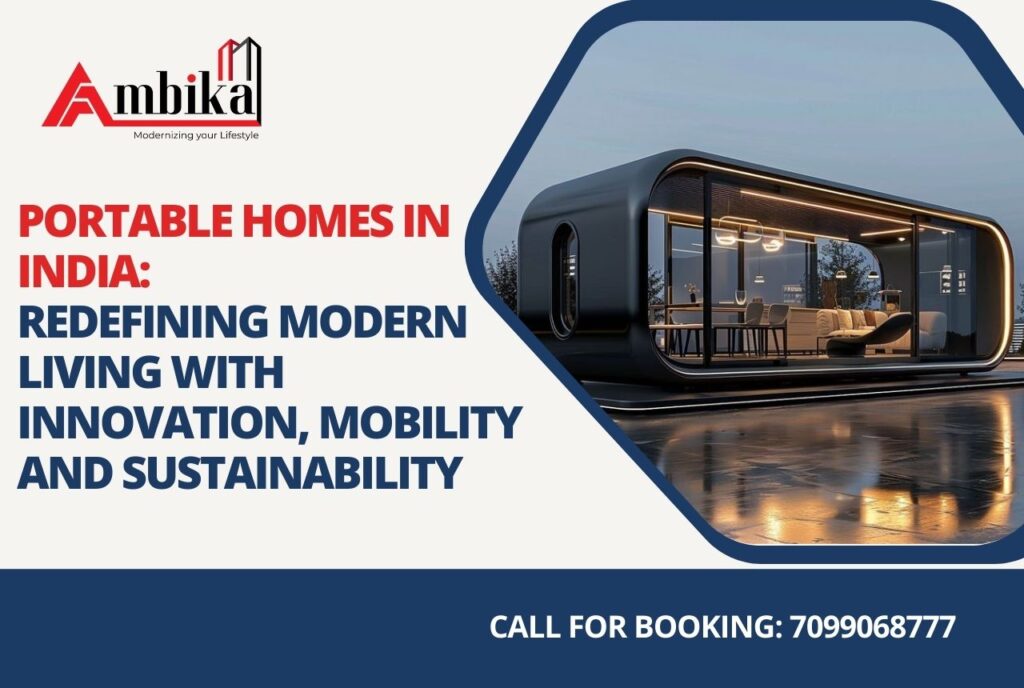
In this evolving scenario, portable homes in India are emerging as a progressive housing solution that aligns with contemporary lifestyles. These homes are not merely temporary structures; they represent a new approach to architecture and living—one that prioritizes mobility, cost-effectiveness, and environmental responsibility without compromising comfort or aesthetics.
From private residences and holiday homes to commercial applications and institutional use, portable housing is steadily reshaping how spaces are designed, built, and utilized across the country.
Understanding Portable Homes
Portable Homes in India are prefabricated structures manufactured in a controlled factory environment and then transported to the site for installation. Unlike conventional buildings that require extensive on-site labor and long construction timelines, portable homes are designed for quick assembly and minimal disruption.
They are built using advanced materials such as galvanized steel frames, insulated sandwich panels, engineered wood, and sustainable composites. These materials ensure durability, weather resistance, and energy efficiency, making the homes suitable for India’s diverse climatic conditions—from coastal humidity to extreme heat and cold regions.
Why Portable Homes Are Gaining Momentum in India
The growing popularity of portable homes in India can be attributed to several interconnected factors:
- Urban land scarcity and soaring real estate prices
- Increased demand for rapid housing solutions
- Changing work patterns, including remote and transferable jobs
- Rising awareness of sustainable construction practices
- Growth of modular and prefabricated technologies
Additionally, the younger generation’s preference for minimalist, functional, and flexible living spaces has further accelerated acceptance of portable housing.
Key Advantages of Portable Homes
1. Faster Construction Timelines
One of the most compelling benefits is speed. Since most of the construction occurs off-site, installation can be completed in a fraction of the time required for traditional homes. This makes portable housing ideal for urgent requirements or time-sensitive projects.
2. Cost-Effective Housing Solution
Portable homes reduce costs associated with labor, raw materials, and construction delays. Predictable budgeting and fewer unforeseen expenses make them financially attractive, especially for first-time homeowners and investors.
3. Mobility and Relocation
Unlike fixed structures, portable homes can be dismantled and relocated. This feature is particularly valuable for professionals with transferable jobs, project-based industries, and evolving land-use needs.
4. Sustainable and Eco-Friendly
Sustainability is a core advantage. Many portable homes are designed to minimize material wastage and energy consumption. Features such as solar integration, energy-efficient insulation, and rainwater harvesting support eco-conscious living.
5. Custom Design Possibilities
Despite being prefabricated, these homes offer extensive customization options. Floor plans, interior layouts, façade designs, and finishes can all be tailored to match personal or brand preferences.
Types of Portable Homes Available in India
The market for portable homes in India is diverse, catering to a wide range of applications and budgets.
Container Homes
Constructed from repurposed shipping containers, these homes are known for their strength, modern aesthetic, and industrial appeal. They are widely used for residential, commercial, and hospitality purposes.
Modular Homes
Modular homes consist of factory-built sections that are assembled on-site. They allow for easy expansion and future modifications, making them suitable for long-term residential use.
Foldable and Mobile Homes
Designed for rapid deployment, these homes are ideal for emergency housing, temporary accommodation, and site offices. Their compact design allows easy transportation and setup.
Prefab Villas and Cottages
Often used in resorts, farmhouses, and vacation destinations, prefab cottages combine luxury with efficiency, offering visually appealing and comfortable living spaces.
Applications Across Multiple Sectors
Portable homes have expanded far beyond individual housing needs. Their versatility makes them suitable for various industries:
- Residential living for urban, semi-urban, and rural settings
- Hospitality sector including eco-resorts, homestays, and retreats
- Commercial spaces such as offices, retail outlets, and pop-up stores
- Healthcare and education facilities in remote locations
- Disaster relief and rehabilitation housing
The adaptability of portable homes in India allows them to function effectively as both temporary and permanent structures.
Cost Considerations and Value Proposition
The cost of portable homes varies depending on size, materials, design complexity, and customization level. Entry-level units are significantly more affordable than traditional houses, while premium designs may rival luxury construction—yet still offer better efficiency and faster delivery.
When evaluating overall value, portable homes often outperform conventional construction due to:
- Reduced construction time
- Lower maintenance requirements
- Energy savings over time
- Flexibility for future relocation or resale
Legal and Regulatory Aspects
Before investing in portable housing, it is important to understand local regulations, zoning laws, and land-use permissions. In some areas, portable structures may be classified differently from permanent buildings, impacting approvals and taxation.
Partnering with experienced manufacturers and consultants can help ensure compliance with regional regulations and streamline the approval process.
Challenges to Consider
Despite their advantages, portable homes also come with certain limitations:
- Limited awareness in traditional housing markets
- Financing options may not be as widespread
- Transportation logistics for large units
- Misconceptions about durability and longevity
However, ongoing technological advancements and growing market acceptance are steadily overcoming these challenges.
Future of Portable Housing in India
The future of housing in India is increasingly focused on efficiency, sustainability, and adaptability. With continued innovation in materials, design, and manufacturing, portable housing is expected to become an integral part of the real estate ecosystem.
Government initiatives supporting affordable housing, green construction, and rapid infrastructure development further strengthen the potential of this sector. As awareness grows, portable homes in India are set to transition from alternative housing to a mainstream solution.
A Smarter Way Forward for Contemporary Housing
The evolution of housing is no longer limited to traditional bricks and mortar. Modern lifestyles demand solutions that are faster to build, easier to adapt, cost-efficient, and environmentally responsible. Portable housing answers these demands by offering a flexible approach to living that aligns with today’s economic realities and tomorrow’s sustainability goals.
These homes are designed to respond to change—whether it’s shifting locations, evolving family needs, or expanding commercial requirements. Their ability to combine durability with design flexibility makes them suitable for long-term residential use as well as commercial, institutional, and emergency applications. What was once perceived as a temporary or niche solution has now matured into a reliable and sophisticated housing option.
As India continues to urbanize and diversify, housing solutions must be scalable, efficient, and resource-conscious. Portable housing fits seamlessly into this future by reducing construction time, minimizing environmental impact, and offering predictable costs. It empowers homeowners, developers, and businesses to rethink how space is created and utilized.
Choosing this modern housing model is not merely about convenience- it reflects a forward-thinking mindset that values innovation, sustainability, and adaptability. In a rapidly changing world, investing in such smart housing solutions represents a confident step toward resilient, future-ready living.