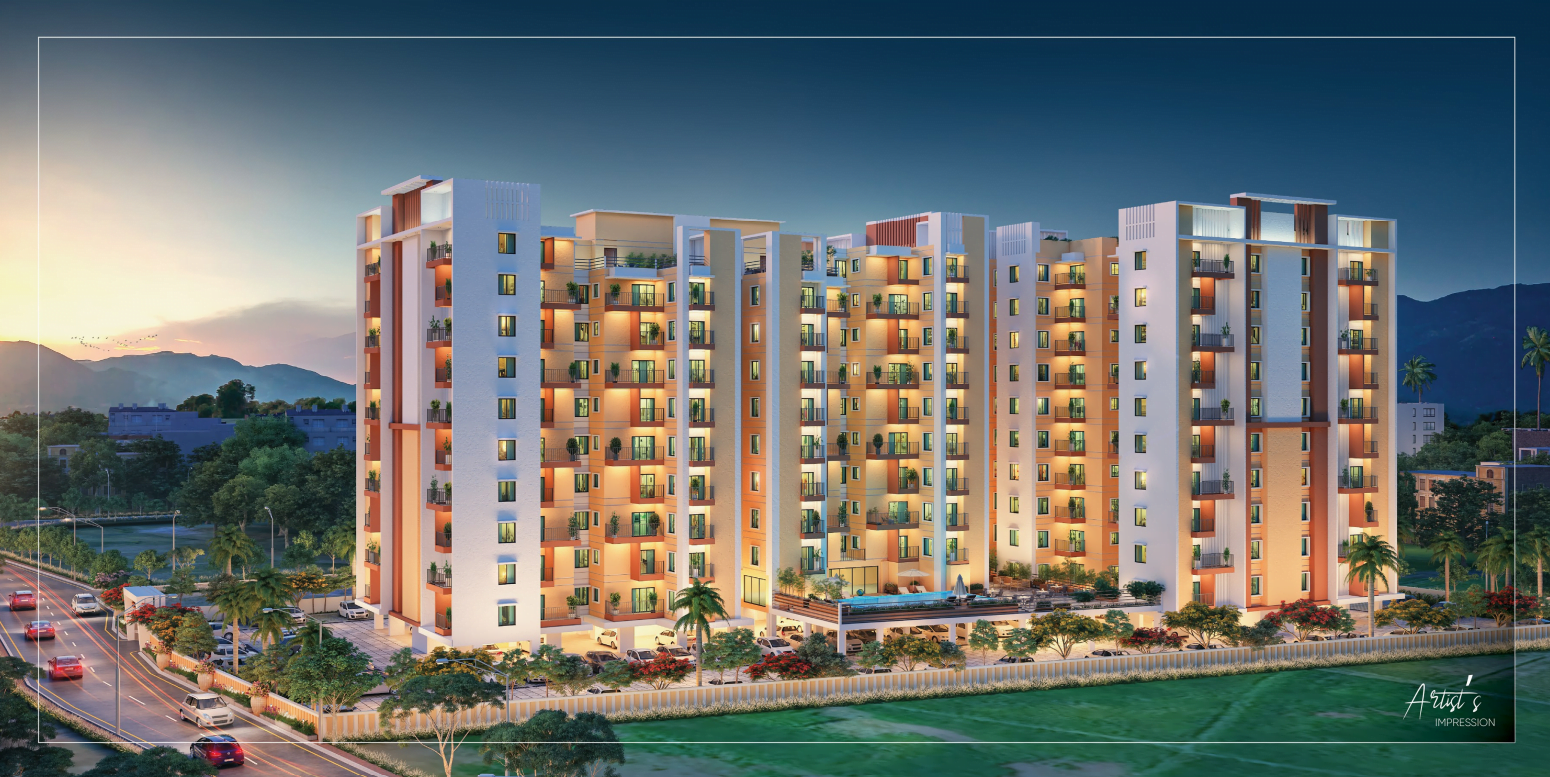


“Should I keep renting, or is it finally time to buy?” It is one of the biggest money decisions most families in Guwahati will ever make — and the honest answer is that it depends on your numbers, your timeline, and your plans, not on a one-line rule. This guide breaks the rent vs buy question down the way it deserves: with real Guwahati costs, current 2026 home-loan rates, a worked EMI-vs-rent example, and a simple framework you can apply to your own situation.
Rent vs Buy at a Glance
Before the maths, here is the honest trade-off. Neither option is “throwing money away” — renting buys you flexibility and low commitment, while buying buys you stability and equity. The right choice is the one that fits your life stage.
| Factor | Renting | Buying |
| Upfront cost | Low — 1–3 months’ deposit | High — down payment (10–20%) + stamp duty & registration |
| Monthly outgo | Rent (typically rises 5–8% a year) | EMI (fixed instalment; adjusts only if floating rate changes) |
| Equity built | None | Grows with every EMI you pay |
| Appreciation | Landlord keeps all of it | You keep 100% of any price rise |
| Flexibility to move | High — leave at notice | Low — selling takes time & cost |
| Maintenance & repairs | Mostly landlord’s problem | Your responsibility |
| Tax benefit | HRA exemption (if salaried) | Sec 24, 80C, and possibly 80EEA |
| Stability | Subject to renewal & rent hikes | It’s yours — no eviction, no hikes |
The Real Cost of Renting in Guwahati
Renting looks cheap month-to-month, and for many people that is exactly the point. A comparable 2BHK in a decent Guwahati locality — think Six Mile, Beltola, Hatigaon or Kahilipara — typically rents in the range of roughly ₹12,000 to ₹22,000 a month, with premium gated projects on GS Road commanding more. But the sticker rent is not the whole story:
- Annual escalation. Most landlords raise rent by around 5–8% each year, so a comfortable rent today quietly compounds over a decade.
- Deposits & churn. Security deposits (often 1–3 months), brokerage, and the cost and hassle of shifting every few years all add up.
- No equity. After ten years of on-time payments, you own nothing and have no asset to show for it — though you did enjoy full flexibility.
The Real Cost of Buying in Guwahati
Buying front-loads the cost. Beyond the flat’s price, budget for the extras that first-time buyers often forget:
- Down payment: usually 10–20% of the price, paid from your own pocket.
- Stamp duty & registration: a further 6–8% of the property value in Assam (verify the current slab with your registrar before you budget).
- Home-loan EMI: as of 2026, home-loan rates in India run roughly 7.10%–9.75% p.a., with most borrowers landing between 7.65% and 8.50% depending on credit score. The RBI repo rate has held steady at 5.25%, keeping floating-rate loans attractive.
- Ongoing costs: maintenance charges, property tax, and a repair fund you now own.
The pay-off is that every EMI builds equity you keep, and any price appreciation is entirely yours.
The Rent-vs-Buy Math: A 2BHK in Guwahati
Numbers make the trade-off concrete. Here is an illustrative comparison for a mid-range 2BHK, using current 2026 assumptions. Treat these as directional — your own quotes, rate and rent will differ.
| Assumption | Value |
| Property price (2BHK, mid-range) | ₹45,00,000 |
| Down payment (20%) | ₹9,00,000 |
| Home loan amount | ₹36,00,000 |
| Interest rate / tenure | 8.25% p.a. / 20 years |
| Approx. monthly EMI | ₹30,674 |
| Total interest over 20 years | ₹37,61,847 |
| Comparable monthly rent (today) | ₹18,000 |
| Assumed rent escalation | 7% per year |
| Total rent paid over 20 years | ₹88,55,026 |
Run your own figures on the Ambika Housing EMI calculator before you decide — change the price, rate and tenure to match a real quote.
The Break-Even Point: How Long Until Buying Wins?
The single most important variable in rent vs buy is not the interest rate — it is how long you will stay. Buying carries heavy one-time costs (down payment, stamp duty, registration, brokerage). You only recover those costs, and start coming out ahead of renting, after you have held the home long enough for equity and appreciation to overtake them.
- Staying under ~4 years: renting usually wins — you may not hold the flat long enough to recover buying’s upfront costs.
- Staying ~5–7 years: it’s often a toss-up in Guwahati, tilting toward buying as appreciation kicks in.
- Staying 8+ years: buying almost always wins, especially once the loan matures and the EMI ends but rent would have kept rising.
Key Factors That Tip the Decision
1. Your time horizon
Covered above — and it outranks everything else. Short stay favours renting; long stay favours buying.
2. The price-to-rent ratio
Divide the flat’s purchase price by its annual rent. A comparable 2BHK priced at ₹45,00,000 renting at ₹18,000/month (₹2,16,000/year) gives a ratio of about 21. As a rough guide, a ratio under ~16 leans toward buying, 16–21 is a grey zone, and above ~21 leans toward renting.
3. Opportunity cost of the down payment
The ₹9,00,000 down payment could otherwise be invested. Buying makes more sense when expected home appreciation plus rent saved beats what that money would likely earn elsewhere — and when you value the security of a home you own.
4. Job & life stability
If your work may relocate you, or your family size is still changing, renting’s flexibility has real value. If you are settled in Guwahati for the long haul, buying compounds in your favour.
5. Emotional & lifestyle value
A home you own means no landlord, no sudden hikes, freedom to renovate, and a place that is genuinely yours. That stability is hard to price — but it is real, and for many families it is the deciding factor.
When Renting Makes More Sense
- You expect to move cities or change jobs within a few years.
- You are still building your down payment or emergency fund — buying too early can leave you cash-poor.
- You want maximum flexibility and minimal maintenance responsibility.
- You are testing a locality before committing to it long-term.
When Buying Makes More Sense
- You plan to settle in Guwahati for six years or more.
- You can comfortably fund the down payment plus stamp duty and registration without emptying your savings.
- You want to build equity and lock in your housing cost against future rent hikes.
- You value stability, ownership, and the freedom to make a space your own.
The Guwahati Angle: Why Local Context Matters
Rent vs buy is never just a spreadsheet — it is shaped by the local market, and Guwahati has some specific tailwinds and quirks worth weighing:
- Steady demand & appreciation. As the gateway to Northeast India, Guwahati has seen sustained post-2020 growth driven by infrastructure — AIIMS, the Ring Road, and improving connectivity — supporting long-term property values.
- Value pricing vs metros. Mid-range quality projects run roughly ₹3,200–₹4,500 per sq. ft., far below metro levels, so the entry cost of ownership is more achievable here.
- Seismic Zone V. Guwahati sits in India’s highest earthquake-risk zone. Whether you rent or buy, prioritise structurally sound, RERA-approved buildings from reputed developers — this matters even more when you own.
- RERA protection. Buying a RERA-registered project (verifiable on the Assam RERA portal) gives you legal recourse and delivery-timeline transparency that renting simply doesn’t require.
Tax Benefits: A Quiet Advantage of Buying
Home ownership carries tax breaks that renting cannot match (subject to your chosen tax regime — confirm current rules with a tax advisor):
- Section 24(b): deduction on home-loan interest for a self-occupied property, up to ₹2 lakh a year.
- Section 80C: deduction on principal repayment, within the overall ₹1.5 lakh limit.
- Section 80EEA: additional interest deduction for eligible first-time buyers of affordable homes, where applicable.
Renters who are salaried can still claim HRA exemption — so weigh both sides against your actual salary structure.
Ambika Housing — Best Real Estate Developer in Guwahati
If the numbers point toward buying, Ambika Housing (est. 2002) offers RERA-approved, Vastu-compliant homes across Guwahati, with bookings currently open at Ambika Ananda (G+10, 194 units) and Diamond Home (G+13, 181 units).
Frequently Asked Questions
Is it better to rent or buy a flat in Guwahati in 2026?
If you plan to stay six years or more and can fund the down payment plus registration comfortably, buying is usually the stronger long-term choice thanks to equity, appreciation and tax benefits. If you may move within a few years or are still building savings, renting’s flexibility often wins. Your time horizon is the deciding factor.
How much home loan interest should I expect in 2026?
Home-loan rates in India in 2026 run roughly 7.10%–9.75% per annum, with most borrowers landing between 7.65% and 8.50% depending on credit score, income and lender. The RBI repo rate has held at 5.25%, keeping floating-rate loans competitive.
What is the price-to-rent ratio and how do I use it?
Divide a home’s purchase price by its annual rent. Below about 16 leans toward buying, 16–21 is a grey zone, and above 21 leans toward renting. It’s a quick sanity check, not the whole decision.
How much should I save before buying a home in Guwahati?
Plan for the down payment (typically 10–20% of the price), stamp duty and registration (around 6–8% in Assam), plus a separate emergency fund of several months’ EMI. Buying without that buffer is the most common first-time-buyer mistake.
Does renting mean I’m wasting money?
No. Renting buys flexibility, low commitment and freedom from maintenance — genuine value, especially early in a career or when your plans are still fluid. It only becomes the costlier option once you’ve stayed long enough that ownership would have built more equity than the rent you paid.